


AI Image to Video Generator
G.K. Apps Studio
AI Image to Video Generator caught my attention because it turns a simple idea into something more visual without asking me to learn a full editing suite first. It sits in the art and design category, but I found it more useful as a quick creative companion than as a complete production studio. I can start with an image concept, explore an artistic direction, and work toward a moving result from the same general workflow. That makes the app appealing during the first few sessions, especially when I want to experiment rather than build a carefully controlled commercial project.
The app is made by G.K. Apps Studio and is free to install, which lowers the barrier to trying it. Its audience is broad enough to include casual creators, students, social media users, and anyone who enjoys testing visual ideas. The age rating is Everyone, so the presentation is approachable rather than aimed only at professional designers. Still, the most important question is not whether the first result looks impressive. It is whether the app remains useful once the novelty of generating a few images and videos has worn off.
What the first week feels like
During an initial week, the strongest part of the experience is the speed of moving from an idea to a visual experiment. Instead of opening a traditional drawing app, choosing a canvas, selecting brushes, and building an image manually, I can think in terms of a scene or mood. That changes the creative process. I spend more time deciding what I want to see and less time preparing a workspace.
The app is particularly inviting when I do not have strong drawing skills. A person who can describe a dreamy landscape, a stylized portrait, or a futuristic object may get more immediate satisfaction here than from a conventional illustration tool. The result is not necessarily the final artwork I would publish, but it gives me a starting point that I can evaluate, revise, or use as inspiration.
Its image-to-video focus gives the first week a second layer of appeal. A still image can feel finished and static, while a video version suggests movement, atmosphere, and a possible story. I can imagine using a generated image as the opening visual for a short social post, a mood board, a presentation concept, or a personal project. The useful shift is from collecting pictures to testing how an idea might behave over time.
Related News

Why WhatsApp Messenger Still Makes Everyday Communication Feel Easy

Jurassic World: The Game Is the Better Dino Tycoon for Strategic Players

Threads in Real Life: Who Should Join, Lurk, or Leave

How SHEIN Turned Shopping Into an Endless Content Feed

How to Make Fortnite Feel Smarter on Mobile

Should You Switch to Microsoft Outlook on Mobile?
I would not approach it expecting the same control as a dedicated video editor. Traditional editors are better when I need exact timing, carefully chosen transitions, audio alignment, captions, or a repeatable sequence. This app is more suitable at the exploratory end of the process, where the main question is, “What could this idea look like if it moved?”
The broader promise also includes art and three-dimensional photo styles, which makes the app feel less narrow than a single-purpose animation utility. In practice, that variety is valuable because it encourages comparison. I can consider whether an idea works better as a conventional image, a more stylized artwork, or a dimensional-looking composition before committing to a larger project.
Who gets the most from the early experience
I think beginners will appreciate the low-pressure entry point most. Someone making a birthday concept, a visual prompt for a writing project, or a quick post for friends does not necessarily need layers, masking, keyframes, or advanced color controls. The app gives that person a way to explore visual direction without first studying design software.
Gallery
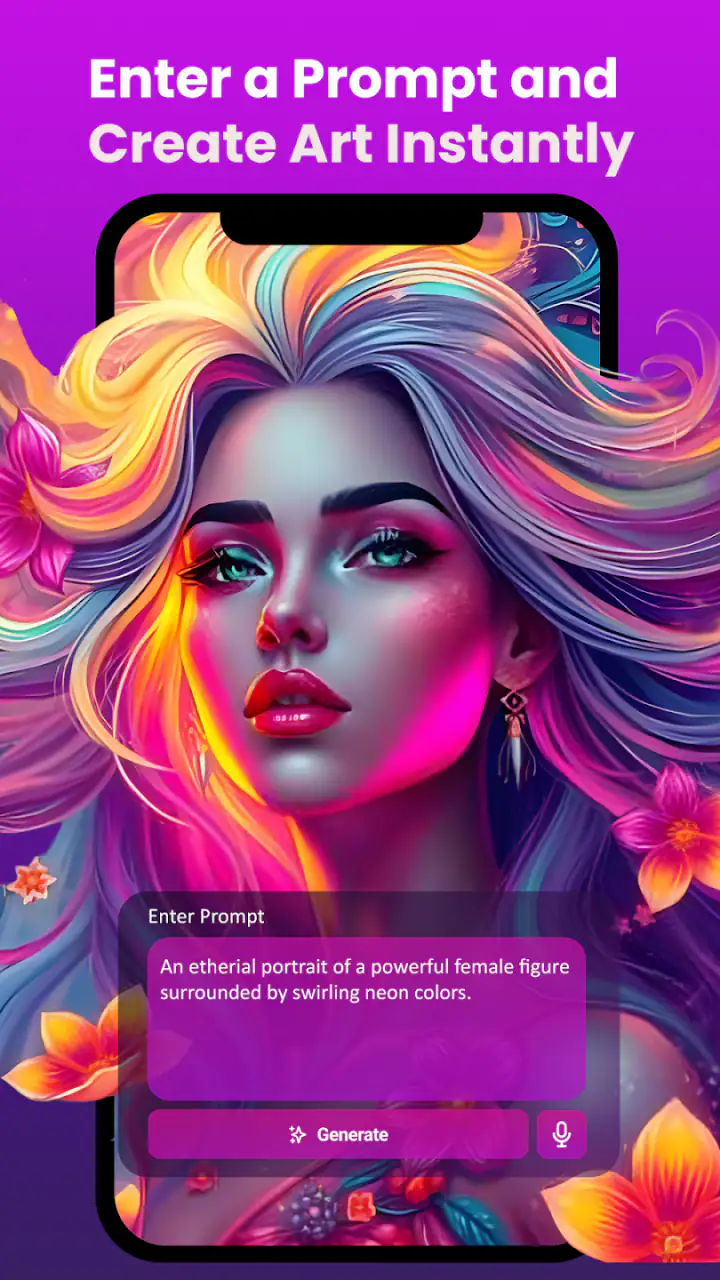
It is also a good fit for people who regularly run out of ideas. I sometimes use generative tools not because I need a finished asset immediately, but because seeing an unexpected interpretation helps me decide what I actually want. A rough result can reveal a better palette, composition, or atmosphere. That makes the app useful as a brainstorming surface, even when I later finish the work somewhere else.
Small businesses and independent creators may find a practical role for it in early planning. For example, before creating a product announcement, I could use a visual concept to test whether a theme feels calm, playful, dramatic, or futuristic. The important trade-off is that this is an idea-development workflow, not a guarantee of brand consistency. If every post must preserve the same character, layout, and visual identity, a more controlled design application will usually be the safer choice.
A realistic everyday workflow
Imagine I am preparing a short weekend post about a local art event. I might begin with an image concept that combines a gallery wall, warm lighting, and an energetic evening mood. After reviewing the result, I could try a video interpretation to see whether gentle movement makes the idea more inviting. If the generated direction feels too busy, I can return to the concept and simplify the visual goal before sharing anything.
That workflow is more realistic than treating every output as publication-ready. The app helps me make decisions earlier. It can show whether an atmosphere works, whether an image has enough visual interest to animate, and whether a concept is worth developing. I would still inspect the result carefully before using it publicly, particularly when recognizable people, readable text, products, or precise layouts matter.
One useful habit is to write prompts around the subject, setting, mood, and intended movement rather than stuffing in a long list of unrelated details. A focused concept gives me a better basis for judging the output. For image-to-video work, I also think about what should remain stable and what should move. If everything is described as dramatic or constantly changing, the result may become harder to use than a simpler interpretation.
Whether it keeps earning a place over time
Month-to-month value depends on your creative rhythm
After the first burst of experimentation, the app’s value becomes more personal. If I frequently need visual prompts, short creative studies, or fresh starting points, it can remain part of my routine. If I only wanted to generate one amusing clip, the appeal may fade quickly. The difference is not the number of available possibilities; it is whether those possibilities connect to something I already do.
For me, recurring value comes from using it at the beginning of a project rather than at the end. I can create a visual reference for a story, test a campaign mood, or explore an illustration direction before spending time on detailed editing. This makes it a companion to other tools instead of a replacement for them. The app earns space when it removes hesitation at the start of a creative task.
The current version is 3, and the app has passed the early adoption stage with over ten thousand installs. Those details suggest that it is accessible enough for people to try, but they do not by themselves tell me whether it will become a dependable long-term tool. I judge that by repeat usefulness: can I return after a week and still find a reason to open it?
One answer is to build a small personal workflow around it. I might keep a note of concepts that need visual development, use the app only when a project reaches the sketching stage, and save the strongest directions for later editing. This prevents random generation from becoming the whole activity. It also makes each session easier to evaluate because I have a purpose before I begin.
The app can be especially worthwhile for educators and learners who need visual examples quickly. A student could explore how the same idea changes when expressed as a realistic scene, an illustration, or a dimensional image. A teacher might use generated concepts to start discussion about composition and motion. In those situations, the value is not just the output; it is the conversation and comparison that the output makes possible.
Where established alternatives still win
Compared with a standard drawing app, AI Image to Video Generator is faster for ideation but weaker for deliberate manual construction. A drawing application gives me direct control over every line, layer, and correction. That matters when I need to reproduce a specific logo, create clean diagrams, or make a character consistent across many frames.
Compared with a conventional photo editor, this app is more imaginative but less dependable for exact retouching. A photo editor is the better choice when I need to remove a distracting object, correct exposure, preserve a person’s identity, or prepare a precise crop for a publication. Here, I would use the generated result as a creative variation, not as a substitute for careful photographic work.
Compared with a dedicated video editor, the app is attractive for turning a visual idea into a quick moving concept, while the dedicated editor remains stronger for finishing. If my project depends on a specific duration, soundtrack, sequence of shots, subtitles, or detailed pacing, I would move to a tool built around a timeline. The two categories solve different problems, and expecting this app to handle every stage would create unnecessary frustration.
This distinction is one of the most important long-term judgments. The app is not valuable because it eliminates all other creative software. It is valuable when it shortens the distance between imagination and a rough visual direction. Once I understand that role, I am less likely to blame it for lacking the controls of a professional editor.
The maintenance burden is modest, but the creative burden remains
Because it is free to install, trying the app does not require a large commitment at the beginning. However, free access does not mean every part of a regular workflow is costless. In-app purchases range from thirty-nine cents to $17.99 per item, so I would pay attention to what I am doing before making repeated generations or treating the app as an unlimited production tool.
My advice is to decide what a session is for before spending anything. If I am only comparing styles, I can stop once I have enough information to choose a direction. If I am preparing a project with several variations, I would first determine which outputs are genuinely useful. This avoids the common trap of generating endlessly because each new result might be slightly better.
There is also a maintenance burden that has nothing to do with payments. Generated files can quickly become difficult to organize. I would name or sort the images and videos by project, mood, or intended use instead of leaving everything in one crowded gallery. This is a small step, but it makes the app more valuable months later because I can find the reference that inspired a project.
Another practical habit is to keep a brief note beside each successful concept. I might record the subject, the mood I was aiming for, and what I liked about the result. Even without relying on exact repetition, that record helps me understand my own preferences. It also prevents the app from becoming a stream of disconnected experiments that I never revisit.
What may cause fatigue after the novelty fades
The first source of fatigue is inconsistency. A generated image can be attractive while still missing the specific details I had in mind. When I want a particular object positioned exactly, a familiar face preserved, or text rendered perfectly, repeated attempts may feel less efficient than making the asset manually. The more precise the brief, the more important it becomes to compare the time spent refining here with the time spent using a conventional tool.
The second source is decision overload. Having many possible styles can be exciting at first, but it can also make a simple task feel endless. I have found that setting a stopping rule helps: choose the strongest few directions, identify what each one teaches me, and move on. Without that limit, the app can encourage browsing rather than creating.
A third issue is that motion can expose weaknesses that are easy to overlook in a still image. A composition that looks fine as a picture may not communicate the movement I imagined. I would therefore inspect video results as separate creative pieces, not assume that a successful image automatically becomes a successful animation. This is a meaningful trade-off and one reason I would reserve time for review before sharing.
People who dislike generative experimentation may also tire of the experience quickly. If your preferred process is hands-on drawing, exact photo correction, or structured timeline editing, the app may feel indirect. It is not the right choice simply because it can produce a striking first result. The right choice depends on whether you enjoy exploring possibilities or need predictable control.
Device expectations and everyday practicality
The app supports devices running Android 7.0 or later, which gives it a broad compatibility range for Android users. I would still treat the quality of the experience as dependent on the device and the complexity of the task. A modern phone is generally a more comfortable place for visual creation than an older handset, particularly when I am reviewing larger images or several video variations in one sitting.
I would also plan sessions around attention rather than opening it casually whenever I have a spare second. Creative generation is most useful when I can compare results thoughtfully. A short, focused session with a clear goal is more productive than repeatedly tapping for new variations without knowing what I am trying to improve.
The Everyone rating makes the app approachable for a family audience, but that should not be confused with guaranteed suitability for every creative purpose. Parents, teachers, and younger users should still apply their own judgment about how generated visuals are used and shared. For professional work, I would review every output for accuracy, clarity, and appropriateness before it reaches an audience.
My long-term verdict
I would recommend AI Image to Video Generator to a friend who wants a low-friction way to explore visual ideas, especially someone who is curious about animation but does not want to begin with a complex editor. Its strongest role is as a bridge between a thought and a workable creative direction. It can help me discover a mood, test an image, and imagine movement before I invest in detailed production.
I would not recommend relying on it alone for exact brand assets, technical diagrams, carefully retouched photographs, or videos that need precise editorial control. In those cases, a manual design tool, photo editor, or timeline-based video application is likely to deliver more predictable results. The app is most convincing when I let it handle exploration and use other tools for refinement.
The free installation makes experimentation easy, while the in-app purchase range means regular users should keep an eye on how quickly casual testing becomes paid usage. I see the best value in deliberate sessions tied to real projects rather than unlimited novelty. That approach also reduces creative fatigue and makes the results easier to organize.
My final view is positive but measured. Its lasting value comes from helping me begin, not from promising to finish everything. If I build it into a habit of visual brainstorming, it can deserve a place on my phone beyond the first week. If I am looking for a complete professional studio or a tool that obeys every detail without compromise, I would choose a more specialized alternative instead.
FAQs for AI Image to Video Generator
What is AI Image to Video Generator and how does it work?
AI Image to Video Generator is an app that transforms still images into short animated videos using artificial intelligence. After uploading a photo, you can usually describe the movement or visual effect you want, such as camera zooms, facial motion, flowing hair, or cinematic transitions. The app analyzes the image and creates motion automatically, although results may vary depending on image quality and the complexity of the requested animation.
Can I use my own photos, and what types of images produce the best results?
Yes, the app is primarily designed for creating videos from your own images, including portraits, landscapes, product photos, artwork, and social media graphics. For better results, use sharp, well-lit images with clear subjects and minimal visual clutter. Photos with visible faces and distinct objects are often easier for the AI to animate. Blurry, heavily edited, or low-resolution images may produce unnatural movement or visual distortions.
Is AI Image to Video Generator free to use?
The app may offer free access with limits, such as a restricted number of generations, shorter video duration, lower export quality, watermarks, or a daily credit allowance. More advanced effects, faster processing, longer clips, and watermark-free downloads may require a subscription or in-app purchase. Before generating multiple videos, check the pricing page carefully, especially the renewal terms and whether unused credits expire.
Can the generated videos be saved and shared on social media?
In most cases, generated clips can be exported to your device and shared on platforms such as TikTok, Instagram, YouTube Shorts, Facebook, or messaging apps. Available resolution, video length, file format, and watermark options depend on the version of the app and your subscription plan. Processing and downloading can also take longer for high-quality exports, particularly when servers are busy or your internet connection is slow.
Are my uploaded images and generated videos private and safe?
Before using the app, review its privacy policy because uploaded images may be processed on remote servers rather than entirely on your phone. Check how long files are stored, whether content is used to improve AI models, and how deletion requests are handled. Avoid uploading sensitive documents, private family photos, or images of other people without permission. Also review the app’s permissions and disable access that is not necessary.
Pros
- Turns still images into engaging short videos quickly.
- Offers creative motion effects without advanced editing skills.
- Useful for social media posts
- ads
- and personal projects.
- Saves time compared with creating animations manually.
- Simple interface makes the main tools easy to discover.
Cons
- Results may look unnatural when image details are complex.
- Free exports may include watermarks or usage restrictions.
- Video quality and duration can depend on the selected plan.
- Processing may take longer with high-resolution images.
- Uploaded photos may raise privacy and data-handling concerns.


